
Tips & Trends: Planner Resources

Rethinking Events for Younger Audiences
“Are You Delivering What the Next‑Gen Attendee Wants?” from PCMA’s Convene magazine invites planners to rethink how events resonate with today’s emerging audiences. The article draws on insights from Freeman’s 2024 Organizer Trends Report, spotlighting the need to evolve beyond outdated assumptions.
Some of our key takeaways:
Demographic shift is here: Gen Z workers have now surpassed Boomers in the U.S. workforce, and by 2030, Millennials and Gen Z are expected to make up around 75% of meeting attendees.
Attendee experience matters most: Younger generations prioritize immersive experiences, social connection, and environmental and social responsibility—areas often undervalued in traditional event design.
Reach new audiences: Designing events around the values of younger generations helps attract first-time attendees and future-proof your programming.

Smart Seating Strategies
Seating is more than logistics. It helps shape how attendees learn, engage, and connect. In “Event Seating Styles: How to Choose the Best for Your Events” from Cvent’s Event Blog, Hope Salvatori explores how layout choices can support your goals and improve the overall experience.
The article outlines 18 seating styles (yes, 18!) and 10 key factors to consider when choosing the right setup. It offers helpful guidance for matching each style to your event goals, like using cabaret seating or pods to encourage group interaction. It also emphasizes the importance of accessibility, comfort, and room flow in creating a successful experience.
Thoughtful seating choices can elevate energy, focus, and connection—and help your event succeed without adding complexity.
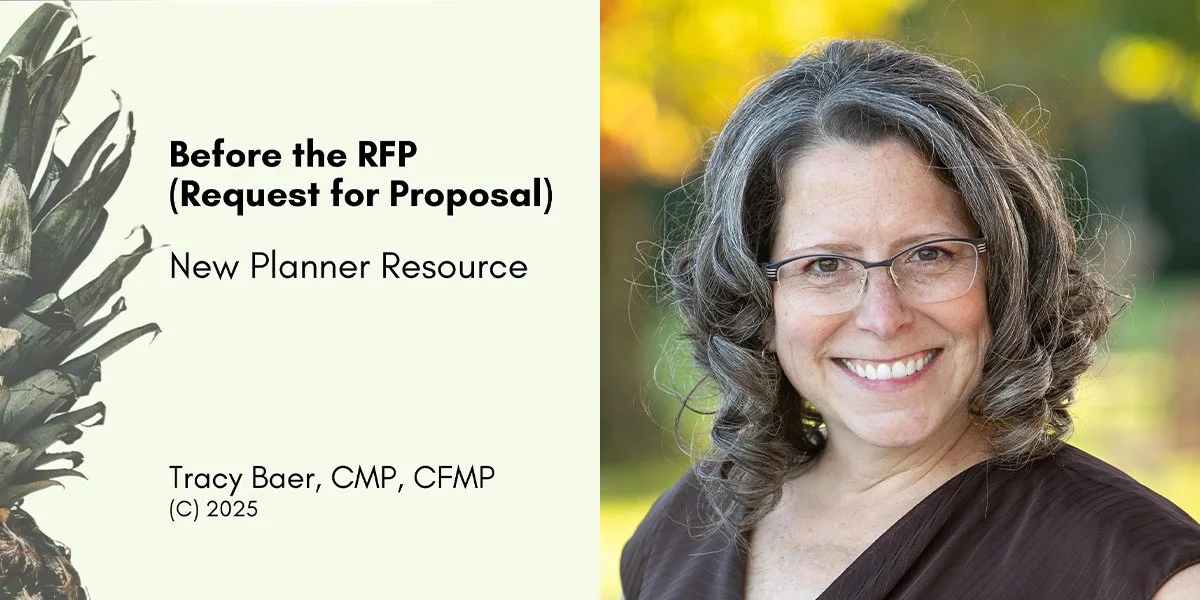
Before the RFP: Free Resource for Planners
If you’re new to planning or looking for guidance on writing an RFP, Tracy Baer has created a valuable resource. A longtime member of the RCMA community, Tracy is known for her thoughtful writing on event volunteerism and her blog Tracy’s Tidbits. Now she’s sharing her expertise in a free, downloadable guide.
Before the RFP (Request for Proposal) helps planners to get organized before reaching out to venues or vendors. It walks through key questions and planning steps that often get skipped, making the RFP process more focused and less overwhelming. It’s a smart, approachable tool written by someone who’s been there—and wants to make your path a little easier.